3D Massage Chair Recovery: Thai Stretch + Zero Gravity
Daily Recovery and Deep Relaxation at Home
A well-designed massage chair can blend deep-pressure back work, assisted stretching, and a reclined “weightless” posture to help ease muscle tension after long workdays, tough workouts, or travel. The goal isn’t just momentary comfort—it’s a repeatable routine that helps the body downshift, loosen up, and feel more mobile. Below is a practical guide to what “3D,” Thai-style stretching, and zero gravity usually mean in day-to-day use, what to look for in fit and comfort, and how to use sessions safely and effectively.
For general background on massage and common benefits and considerations, see NCCIH’s massage therapy overview and Mayo Clinic’s guide to massage benefits.
What 3D Massage Changes Compared With Basic Rollers
Many massage chairs use rollers that travel up and down the back, sometimes with limited side-to-side movement. A 3D roller system adds one of the most important upgrades: adjustable depth. That means the rollers can press in more firmly for stubborn knots or stay shallow for a gentler, more relaxing session.
- 3D depth control matters for both comfort and effectiveness—especially around thicker back muscles that often need a bit more pressure than the mid-spine area.
- Start low and build: even if higher intensity feels appealing, beginning with lighter depth reduces the chance of soreness or “bracing” against the chair.
- Smooth transitions are a major quality marker. The massage should feel controlled as it moves across shoulder blades, along spine-adjacent muscles (not on the spine), and into the lower back.
- Easy mid-session adjustment is a must-have. If a spot feels too sharp or “pinchy,” reducing intensity quickly is the difference between helpful pressure and an unpleasant session.
How Thai Stretch Programs Usually Feel
Thai-style stretch programs in massage chairs typically rely on a combination of airbags and strategic recline angles to create gentle traction and lengthening. Think of it as an assisted stretch sequence rather than a forceful pull.
- Airbag-assisted traction commonly targets hips, legs, and the lower back, aiming for a decompression-like sensation.
- The right feeling is slow and controlled. You should experience mild-to-moderate stretching—not pain, not fast yanking.
- Warm up first: a 5–10 minute massage before stretching often helps muscles “let go” so the stretch feels smoother and less guarded.
- Limited mobility users should choose shorter stretch sessions and avoid aggressive range-of-motion settings until they know what feels safe and comfortable.
Zero Gravity: Why Recline Angle Can Affect Pressure and Comfort
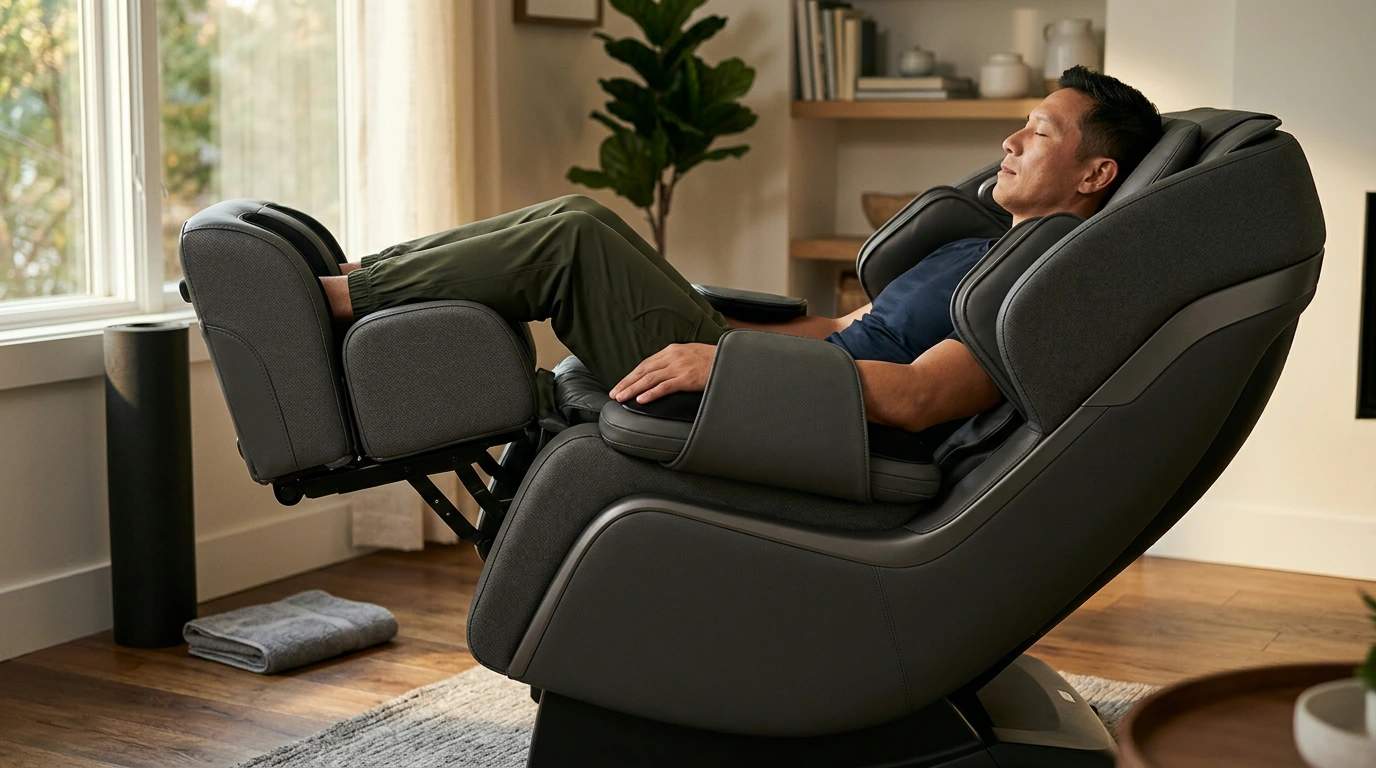
“Zero gravity” typically refers to a reclined posture where the knees are elevated and the backrest leans back, distributing weight more evenly. It’s popular because it can reduce pressure points and make longer sessions feel easier on the body.
- Less spinal loading: elevating the legs and reclining the torso can reduce the feeling of “compression” after sitting or standing all day.
- Recline can intensify roller pressure because the body settles into the chair more fully. If rollers suddenly feel stronger, lower the depth rather than powering through.
- Comfort for longer sessions often improves because weight shifts away from the hips and lower back pressure points.
- If reflux or breathing feels worse when reclined, choose a gentler angle and keep sessions shorter.
Feature Overview: What to Expect From This Chair
The Full Body 3D Massage Chair with Thai Stretch & Zero Gravity is built around a full-body routine: adjustable 3D back massage, assisted stretching sequences, and zero gravity reclining. The sweet spot is day-to-day recovery—alternating deeper pressure when you need it with gentler sessions that prioritize relaxation and mobility.
A balanced weekly approach often works well: keep “deep-tissue” days shorter (higher intensity, fewer minutes), and reserve longer sessions for recovery days (lower intensity plus stretch). Also consider the basics: a quiet room, enough clearance behind the chair for reclining, and a nearby power outlet.
Quick feature-to-benefit guide
| Feature | What it does | Who benefits most |
|---|---|---|
| 3D massage rollers | Adjustable depth for firmer or gentler pressure | Users with tight back/shoulder muscles who want control |
| Thai stretch programs | Airbag-assisted traction and lengthening | People who sit often, athletes, flexibility-focused users |
| Zero gravity recline | Redistributes weight and reduces spinal loading | Anyone seeking longer, more comfortable sessions |
| Full-body approach | Combines back work with lower-body support features | Users wanting an all-in-one daily recovery tool |
Fit, Comfort, and Setup Considerations
A massage chair can have great features but still feel “off” if the fit isn’t right. The best results come when your shoulders land naturally where the massage mechanism expects them to be, your hips feel supported (not squeezed), and your feet/legs sit comfortably in their compartments.
How to Use It for Common Goals
If your recovery routine extends beyond the chair, a practical add-on for riders is the Waterproof Triangular Bicycle Frame Bag – Versatile Cycling Accessory for carrying hydration and essentials, and a steady bedtime rhythm can be supported with the Smart AI Robot Companion & Alarm Clock for Kids in family homes where consistent sleep schedules are part of overall recovery.
Safety Notes and Who Should Check With a Clinician First
FAQ
Is zero gravity comfortable for long sessions?
It often is, because knee elevation and recline can reduce pressure points and distribute weight more evenly. Start with shorter sessions and adjust intensity—reclining can make rollers feel stronger than expected.
How intense should a Thai stretch program feel?
It should feel like a slow, gentle traction with a mild-to-moderate stretch sensation. Avoid pain, and keep range-of-motion settings conservative at first, especially if you’re new to stretching or have limited mobility.
How often can a 3D massage chair be used?
Many people use a chair several times per week or even daily at low intensity. Increase frequency and pressure gradually, and scale back if you notice lingering soreness or irritation.












Leave a comment