Balanced Meal Plan Templates: 1 Week or 1 Month
Healthy Meal Plan & Recipe Collection: One Week or One Month of Balanced Meals and Snacks
A structured meal plan can simplify grocery shopping, reduce decision fatigue, and support steady energy through balanced breakfasts, lunches, dinners, and snacks. A good plan isn’t about “perfect” eating—it’s about having a default that makes the healthy choice the easy choice, even when your schedule is packed. Below is a practical way to use a one-week or one-month plan, set calorie and macro targets without obsessing, and prep key components so meals stay flexible on busy days.
What “balanced” looks like for everyday meals
Balanced meals tend to follow the same repeatable pattern: a solid protein anchor, plenty of fiber, and intentional fats for satisfaction.
- Use the plate method as a default: non-starchy vegetables + protein + high-fiber carbs + healthy fat. For a simple reference, see the USDA MyPlate Plan and the Harvard Healthy Eating Plate.
- Aim for protein at every meal (and most snacks) to support fullness and recovery; needs vary by body size and activity.
- Prioritize fiber from vegetables, beans, whole grains, berries, and nuts/seeds for digestion and steadier energy.
- Include fats intentionally (olive oil, avocado, nuts, seeds, fatty fish) for satiety and nutrient absorption.
- Hydration and sodium balance matter: drink water consistently; adjust electrolytes for heat, training, or low-carb patterns.
Choose your planning horizon: one week vs one month
The best timeframe is the one you’ll actually use. If life changes week to week, shorter plans often win. If you want fewer decisions, longer plans create momentum.
| Feature | One Week | One Month |
|---|---|---|
| Best for | Starting out, busy schedules, frequent changes | Building routine, minimizing decisions |
| Shopping style | 1 main trip + small top-up | Pantry stock-up + weekly fresh produce |
| Variety | High variety if desired | Variety via rotation and swaps |
| Time cost | Lower upfront planning | Higher upfront planning, lower weekly planning |
| Flexibility | Highest | High with templates and substitution lists |
A useful hybrid approach is to plan week 1 in detail, then repeat a flexible template for weeks 2–4 with small swaps (new sauce, different protein, seasonal produce). Also consider a realistic cooking cadence: 2–3 cooking days per week with mix-and-match components often beats daily cooking.
How to tailor calories and macros without overcomplicating
Consistency first, adjustments second. Keep meal timing and general portions stable for 7–14 days before changing targets.
- Protein guide: include a palm-to-hand-sized portion at each meal (more for higher training volume; less may work for smaller appetites).
- Carb guide: add more carbs on training days or high-activity days; reduce slightly on rest days if that feels better.
- Fat guide: keep fats moderate when carbs are higher; increase healthy fats when carbs are lower.
- If tracking is preferred: use ranges and prioritize weekly averages over daily perfection. For broader healthy-weight guidance, the CDC’s Healthy Weight resources are a solid starting point.
Smart meal prep: build once, eat many ways
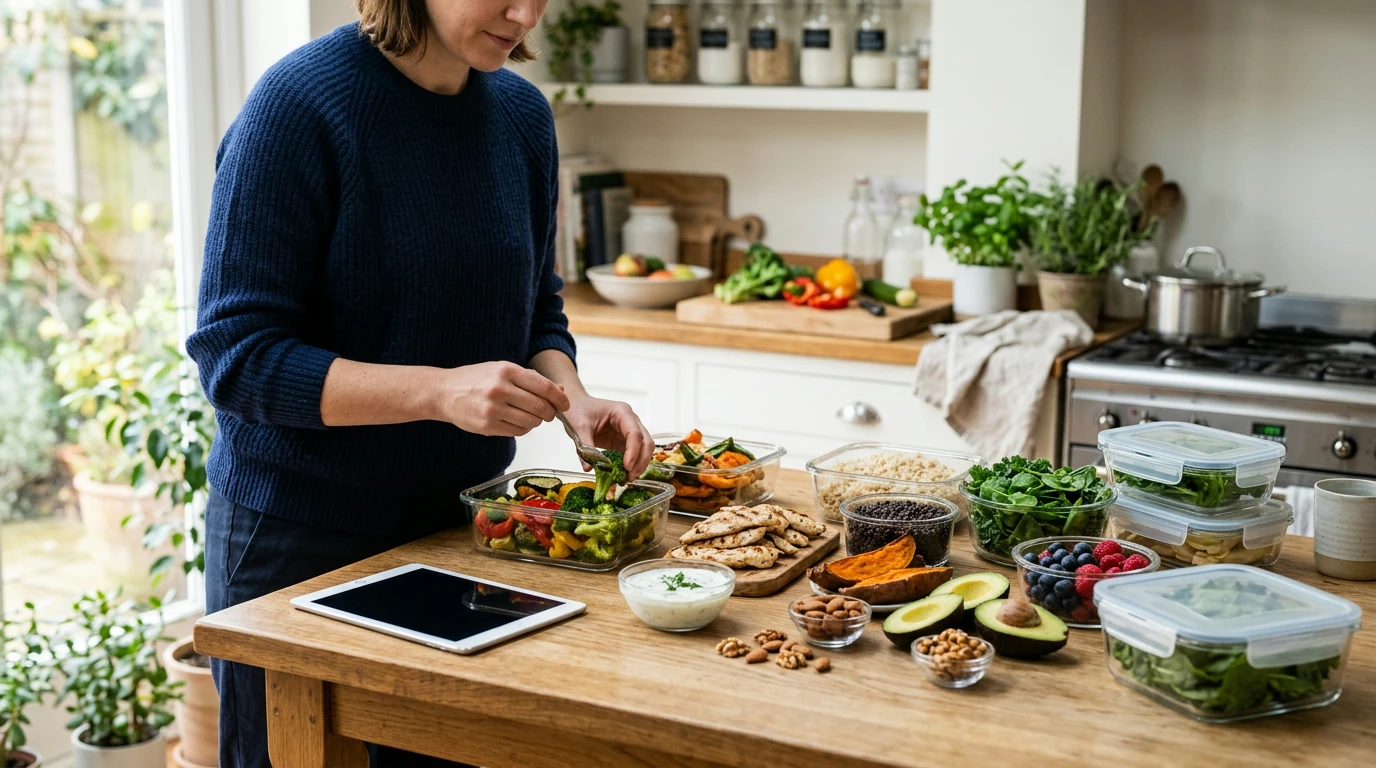
Meal prep works best when it creates options, not a week of identical containers. Think “components” you can recombine.
- Cook 2 proteins (chicken, turkey, tofu, lentils/beans).
- Cook 2 fiber-rich carbs (brown rice, quinoa, sweet potatoes, oats).
- Prep 2–3 vegetable mixes (sheet-pan roasted, stir-fry blend, salad greens).
- Prep fast flavor: salsa, pesto, yogurt sauce, vinaigrette, spice blends, citrus.
- Use the freezer strategically: portion grains, chili, soups, and marinated proteins to reduce weeknight friction.
- Food safety basics: cool cooked foods promptly, store in shallow containers, and label with dates.
A simple 60–90 minute prep block can cover the essentials: wash/chop produce, roast a sheet pan, cook one grain, and assemble a few snack boxes.
Sample day templates (breakfast, lunch, dinner, snacks)
Templates remove guesswork while keeping meals flexible.
Breakfast
Protein + fiber + fruit (examples: Greek yogurt + berries + chia; eggs + veggies + whole-grain toast; tofu scramble + salsa + fruit).
Lunch
Big salad or grain bowl with a clear protein anchor (chicken, lentils, tuna, tempeh). Add crunch (seeds/nuts) and a simple dressing.
Dinner
Sheet-pan or stir-fry format for speed. Aim for at least two colors of vegetables, plus a carb portion if it supports your energy and training.
Snacks
Choose one protein-focused snack and one produce-focused snack daily (cottage cheese + cucumber; apple + nut butter; edamame + berries).
Optional dessert slot
Grocery strategy: a reusable list that supports the plan
Dietary preferences and substitutions that keep nutrition balanced
Using the Healthy Meal Plan & Recipe Collection eBook effectively
If you want the structure done for you, the Healthy Meal Plan & Recipe Collection eBook (one-week or one-month plan) makes it easy to plug in balanced breakfasts, lunches, dinners, and snacks without starting from scratch.
Helpful add-ons for real-life schedules
- Waterproof Triangular Bicycle Frame Bag – Versatile Cycling Accessory for commuting with snacks or packing a quick grocery run.
- Living Room Outdoor Family Shelter Tent for outdoor family meals, picnics, or long event days when planning portable food matters.
FAQ
Is a one-month meal plan too repetitive?
Repetition lowers effort and makes shopping simpler, and it doesn’t have to feel boring. Rotate sauces, swap proteins (chicken, fish, tofu, beans), and change sides with seasonal produce on a 2–4 week loop.
How can meals stay balanced if cooking time is limited?
Use a component-prep approach: one or two proteins, a cooked grain, and frozen or bagged vegetables cover most meals quickly. When time is tight, follow a simple formula—protein + produce + fiber-rich carb or healthy fat.
Can the plan work for weight loss or muscle gain?
Yes—adjust portion sizes and protein consistency rather than reinventing every meal. Add carbs and a bit more total food for muscle gain, or slightly reduce carb/fat portions for weight loss while keeping protein and fiber strong; consult a clinician for medical or highly specific needs.















Leave a comment