Black & White Checkered Bath Mat: Style, Grip, Care
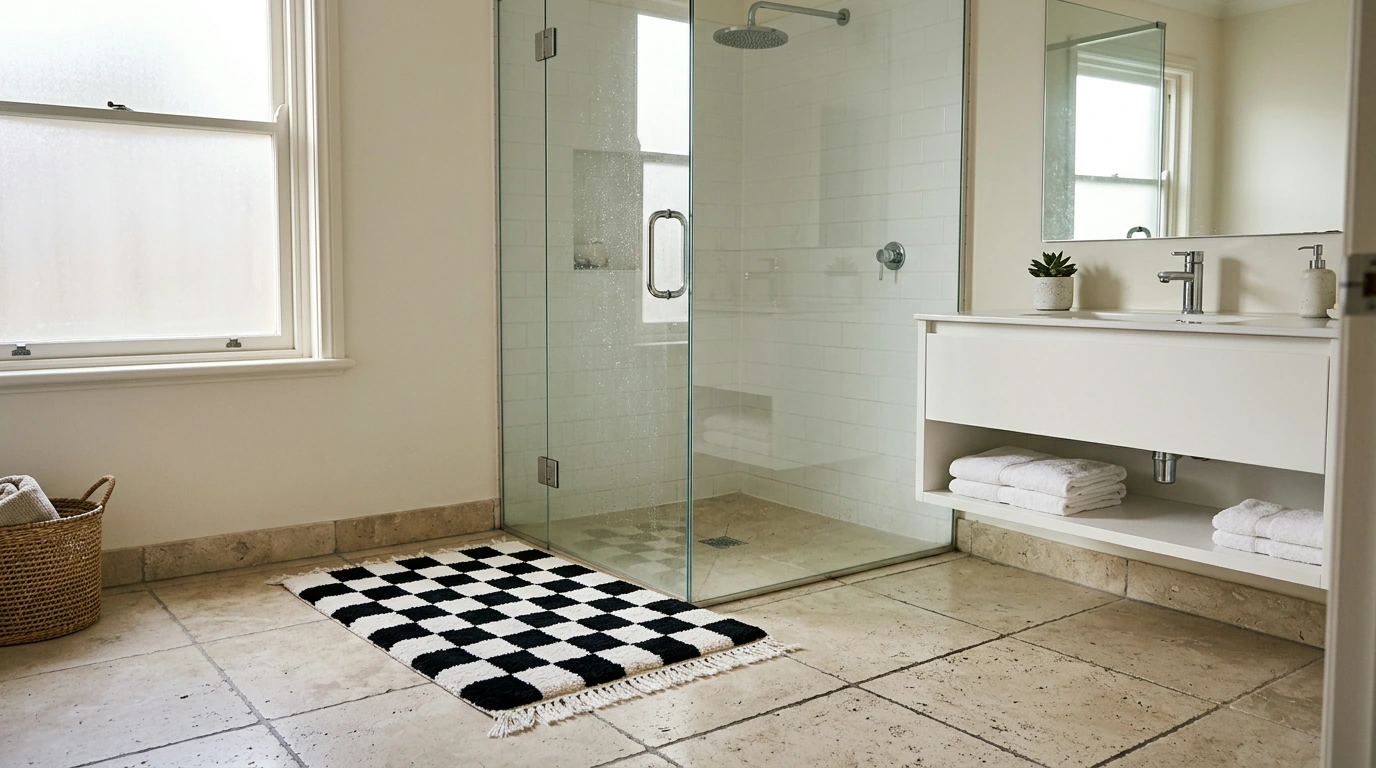
Black-and-White Checkered Bath Mat: Crisp Pattern, Cozy Landing
A black-and-white checkered bath mat brings graphic contrast to the bathroom while giving feet a warmer, drier landing after showers and baths. The right mat balances softness with structure, stays put on smooth flooring, and keeps its pattern looking sharp through regular wash days. Below are practical tips for comfort, stability, styling, care, and smart placement in different bathroom layouts.
What Makes a Checkered Bath Mat Stand Out
The black-and-white grid has an instant “finished” look—no paint job or fixture swap required. The high contrast naturally draws the eye, so even a small bathroom can feel styled with a single textile upgrade.
- Instant focal point: The crisp pattern adds definition against plain tile, simple vanities, or neutral walls.
- Flexible with décor eras: Checkered designs pair easily with modern, minimalist, retro, and monochrome bathrooms.
- Visual anchor for small spaces: In tighter layouts, one statement mat can unify the sink, tub, and towel zones.
- More forgiving day to day: Patterns help camouflage minor lint and everyday wear better than solid light colors.
Comfort Underfoot: What to Expect
A bath mat should feel inviting on bare feet, but it also needs enough density to bounce back after repeated stepping and drying. Comfort is more than “soft”—it’s the combination of pile, weave, and how the mat handles moisture between routines.
- Soft yet resilient: Look for a plush feel without the mat compressing into a flat spot right away.
- Quick surface drying: A mat that releases moisture efficiently stays nicer for the next person, especially in shared bathrooms.
- Edges that lie flat: Flat edges look tidier along a tub line and help reduce corner curling.
- Warmer landing on cold floors: In cool climates or tile-heavy bathrooms, a thicker pile can soften the “cold tile” shock.
Stability and Bathroom Safety
Bathrooms are high-slip-risk zones because smooth flooring meets water and hurried movement. A stable mat supports safer footing when stepping out of the shower or tub, particularly for kids and older adults. For broader safety guidance, see resources from the CDC and the National Floor Safety Institute.
- Prioritize grip: Choose a non-slip backing or add an anti-slip underlay if your tile is slick.
- Keep the area drier overall: Hang the mat to air out and wipe puddles promptly to reduce skidding and damp odors.
- Mind door swing: Make sure the mat doesn’t bunch under the door or catch on the bottom edge.
- Create a clear stepping path: Place the mat where feet land first and where towels are reached easily—less cross-traffic on wet floors.
Where It Works Best in the Bathroom
Outside the tub or shower
Center the mat where feet naturally land. Avoid overlapping curved tub bases, which can lift corners and invite curling.
In front of a single-sink vanity
A checkered pattern can frame the sink zone and visually widen narrow runs. Align the mat to the cabinet width so the look feels intentional.
Double vanity layouts
Two smaller mats can look tailored (one per sink), while one larger checkered mat can make the space feel more continuous and less chopped up—especially in long bathrooms.
Near the toilet (optional)
If you prefer a mat here, keep enough clearance so it doesn’t constantly brush the toilet base. That extra breathing room makes cleaning easier and helps the mat stay cleaner longer.
Style Pairings for a Black-and-White Check Pattern
- Modern: Pair with matte black hardware, white towels, and one warm wood accent (a stool, tray, or frame) to prevent the contrast from feeling stark.
- Retro: Try rounded mirrors and chrome fixtures, then add a bold solid towel color—red, emerald, or cobalt reads classic against the checkerboard.
- Scandi: Soften the grid with pale wood, linen textures, and warm lighting for a calmer, airier vibe.
- Maximalist: Add pattern thoughtfully: keep other patterns larger-scale or limited to one extra zone (like the shower curtain) so the check stays crisp rather than chaotic.
Care and Cleaning for Long-Lasting Contrast
For general laundering best practices, the American Cleaning Institute offers helpful fabric-care basics.
Quick Placement Guide: Choosing the Right Size and Layout
| Placement | Goal | Tip |
|---|---|---|
| Outside tub/shower | Catch first step and absorb splashes | Center where feet land; keep edges flat and away from the tub curve |
| In front of vanity | Comfort while brushing/shaving | Avoid blocking drawers; align to cabinet width for a clean frame |
| Narrow bathrooms | Create a clear walking path | Choose a shape that leaves visible floor margins to prevent a cramped look |
| Shared bathrooms | Reduce puddles and traffic slip risk | Consider two zones: tub/shower landing + sink drip zone |
Shop Picks Available Now
- Black and White Checkered Bath Mat — a bold, clean pattern that suits modern, retro, and monochrome bathrooms.
- Waterproof Triangular Bicycle Frame Bag – Versatile Cycling Accessory — a practical add-on for commutes and weekend rides.
- Smart AI Robot Companion & Alarm Clock for Kids — a fun bedside helper that combines an alarm clock with a friendly companion.
When a Checkered Mat Makes a Great Gift
FAQ
How can a bath mat be kept from sliding on tile?
Choose a mat with a non-slip backing or add an anti-slip rug pad underneath. Make sure the tile is clean and dry where the mat sits, since dust or moisture can reduce traction.
Can a black-and-white bath mat be machine washed without fading?
Most can be washed safely on a gentle cycle using cool-to-warm water and mild detergent. Avoid chlorine bleach, wash with similar colors, and always follow the care label for the specific material.
How often should a bath mat be washed?
In many households, washing weekly or every 1–2 weeks works well, depending on humidity and how many people use the bathroom. Wash sooner if the mat stays damp, develops an odor, or sees heavy daily traffic.














Leave a comment